 01
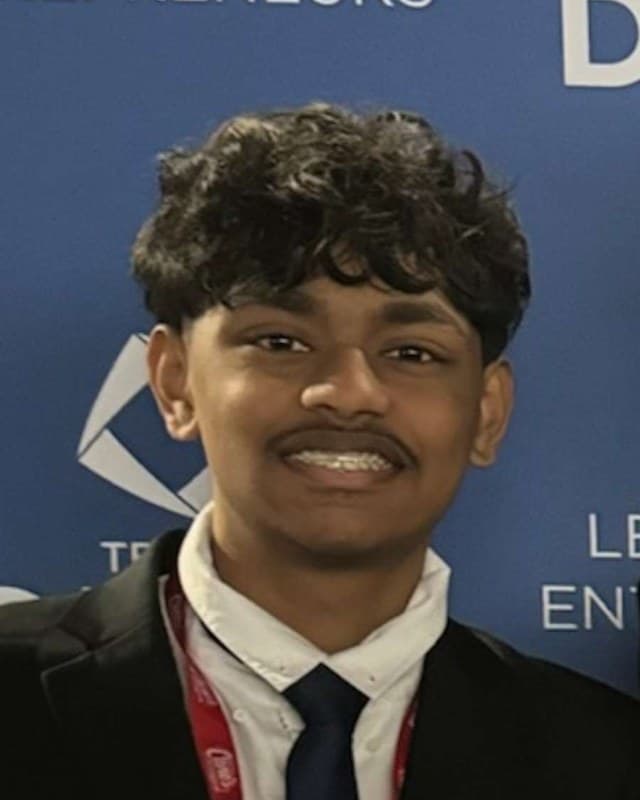
Harshil Perla



Senior · Wakeland HS
BUILDER
Interested in:Data Science and Applied Mathematics
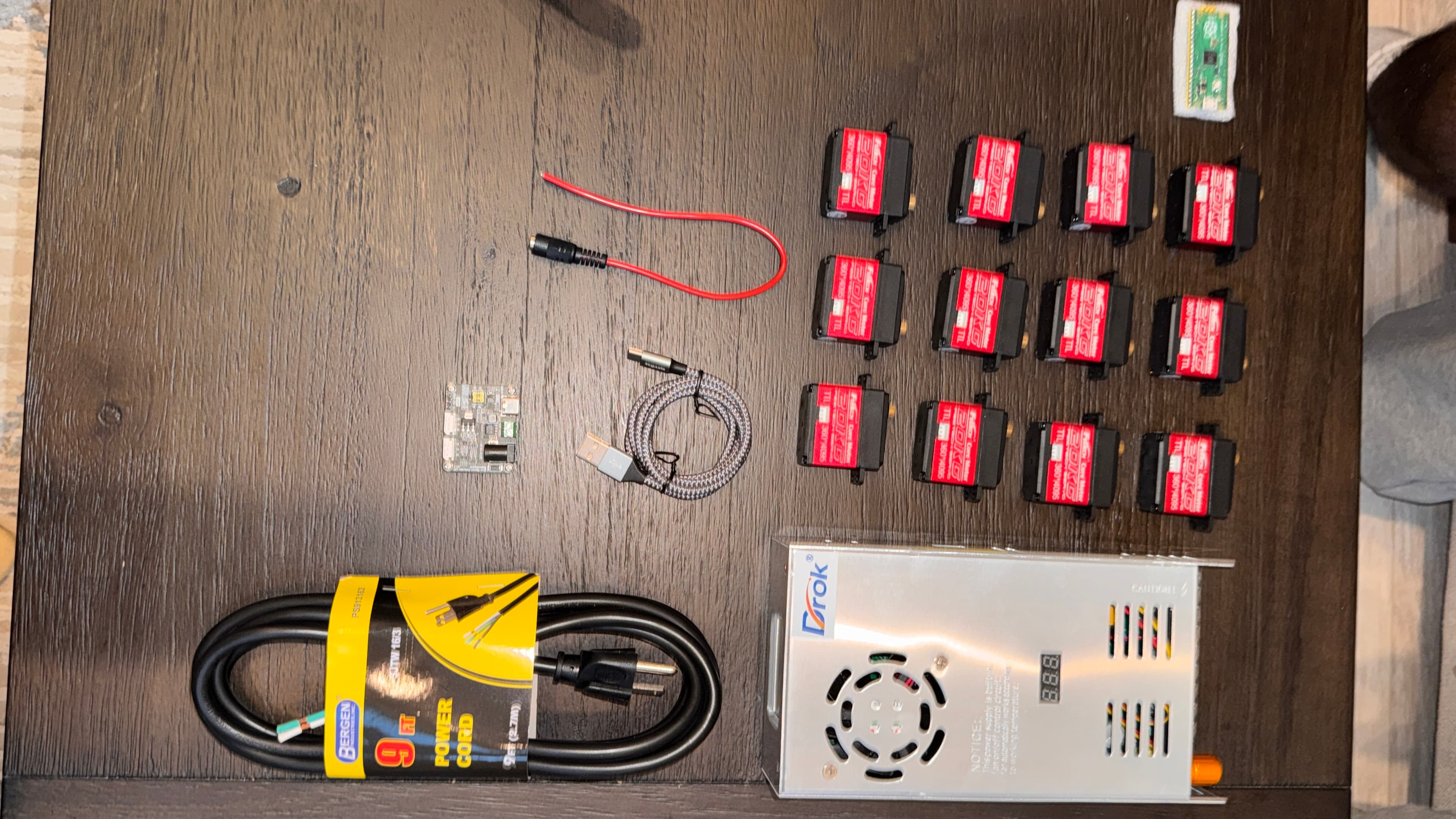
Thirteen servos, a 3D-printed hand, and a laptop watching through a webcam; learning to read and produce the static handshapes of ASL fingerspelling has never been more interactive. By four seniors at Wakeland High School working toward making ASL easier to learn and practice for everyone, follow everything about the build below as it comes together.
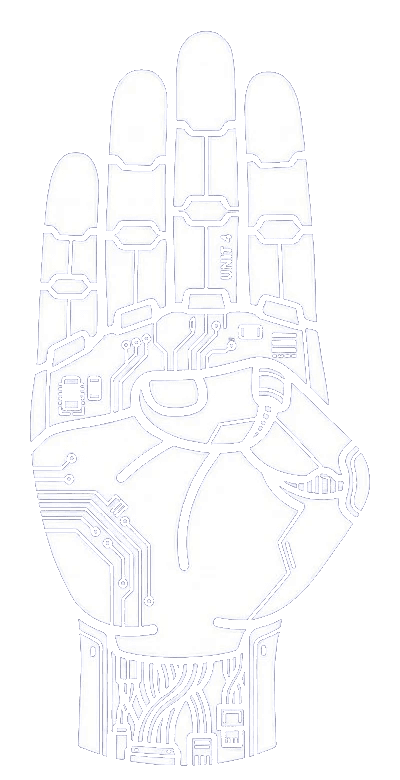
ASL fingerspelling is hard to practice alone: there's no immediate feedback, and no one signing back. We're building a physical, two-way tutor that reads your handshapes and forms its own, so both Deaf and hearing people have a hands-on way to learn and practice ASL — not just a classifier on a screen.
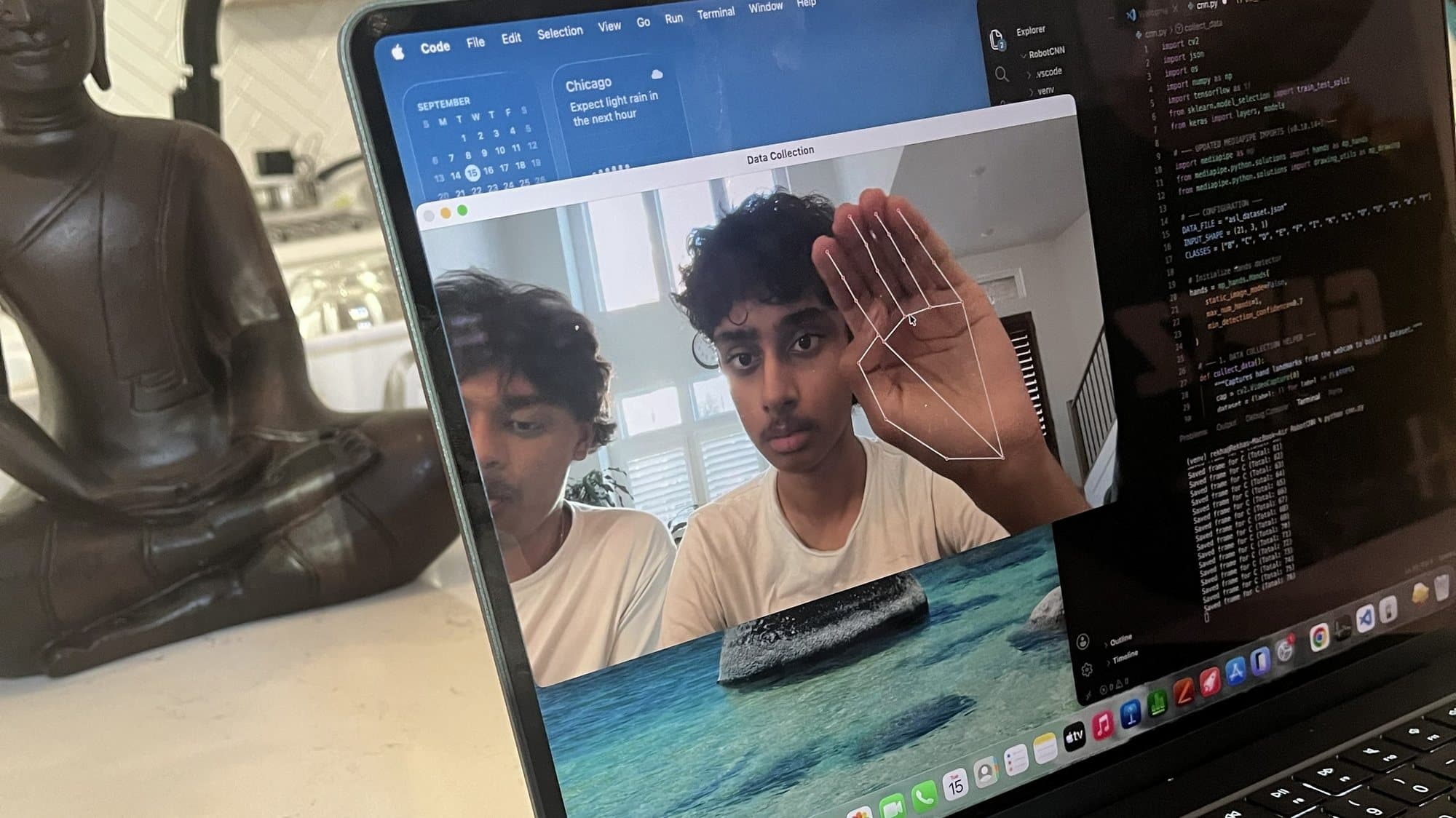
A 3D-printed robotic hand that reads and produces static ASL fingerspelling handshapes in real time — driven by a thirteen-servo actuation system, a Raspberry Pi handling onboard control, and a laptop running Python, MediaPipe, and OpenCV for vision and classification. Every layer of the stack, from the tendon-driven fingers to the landmark-tracking pipeline, was designed to be iterated on quickly, so the system can grow more accurate and more expressive the longer we work on it.
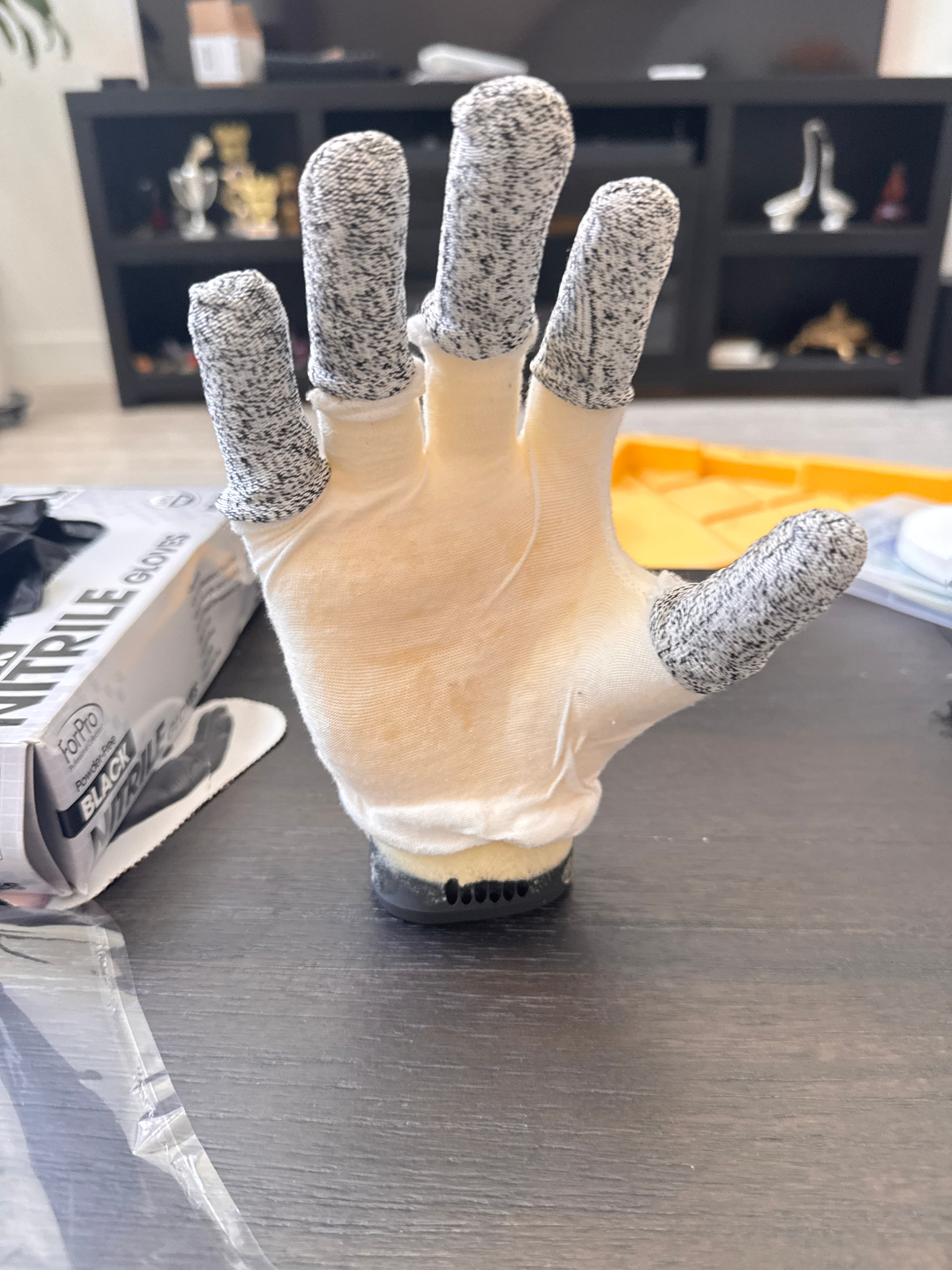
In May, we first found a competent 3D hand model online, one with a rigged mesh that could already perform the motions we need, such as swinging the thumb across the palm and pinching. Then we edited that model so certain areas could move more freely. From there, we built the matching mold in Fusion 360 and 3D printed it at the library, along with the wrist insert that sits at the wrist inside the mold. The insert does two jobs: it holds the foam in place and guides the tendons from a finger to a motor. For the material, we chose a flexible polyurethane foam mix that has the perfect balance of strength and compliance. We poured the polyurethane foam into the mold to ultimately form the bare hand.
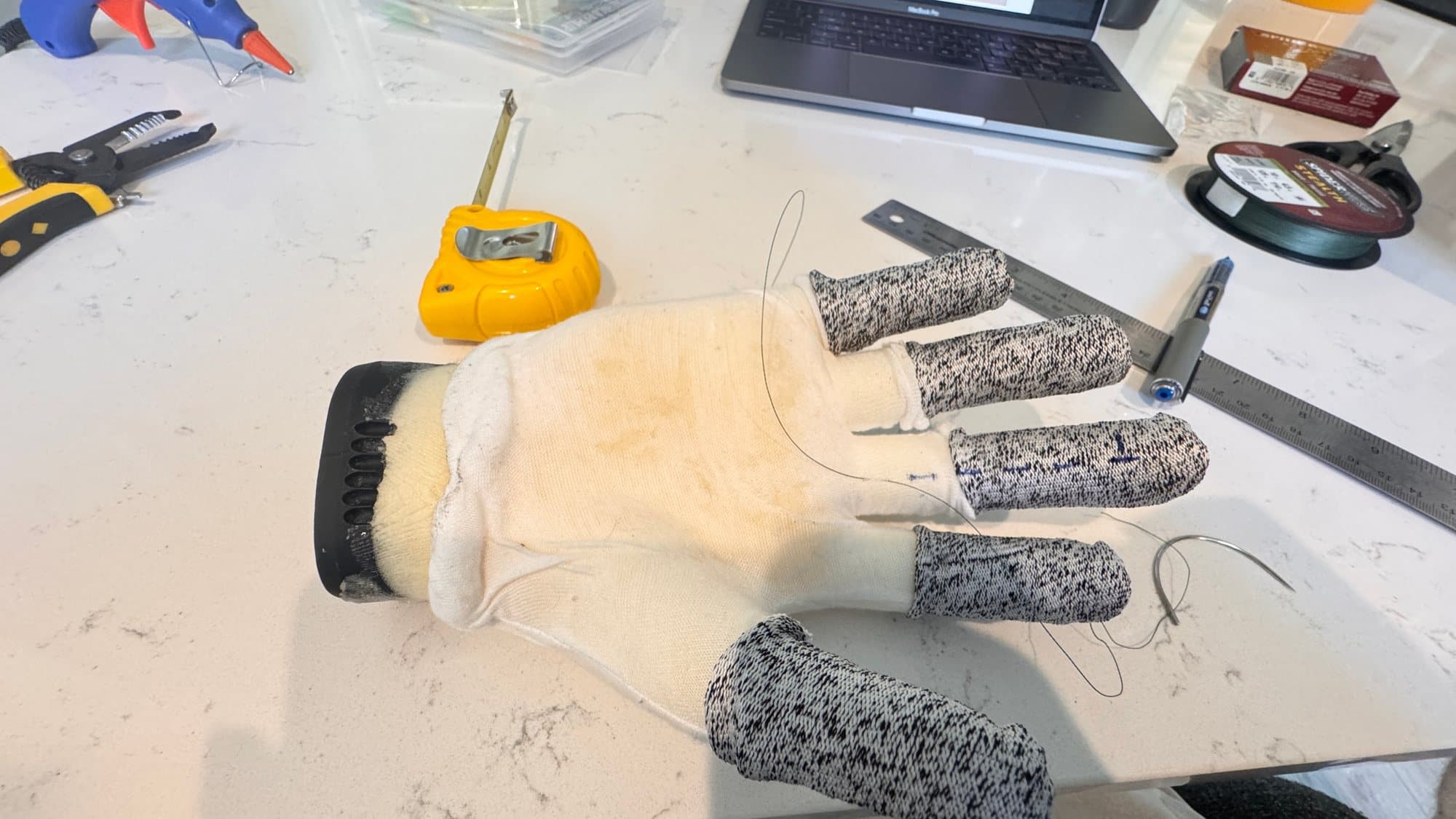
We're four seniors at Wakeland High School, along with guidance from the Institute for Robotics and Intelligent Machines (IRIM) at Georgia Tech's College of Engineering, and the Collaborative Robots & Intelligent Control Systems (Cobotics) Lab at Texas A&M's College of Engineering — all toward a cause we deeply care about: making ASL more approachable to learn, for Deaf and hearing people alike. Our hand is built on an open, low-cost dexterous hand platform — a soft, tendon-driven hand cast from foam and covered in an ordinary cotton glove instead of rigid 3D-printed fingers, refined with input from an actual hand surgeon to get the thumb's motion right. That foundation is what let us focus on the harder problem: teaching it to read and spell in ASL.


SOHA was built to serve the ASL community, and that service begins with assisting and educating organizations on the promise of assistive robotics, starting with the likes of the Deaf Action Center. We will also submit our completed entry to the International Conference on Intelligent Robots and Systems (IROS), and we will take part in and present at the 2027 conference in Florence, Italy. Having carried the project that far, we hope to give SOHA back to the community it was made for, donating it to one of these organizations as a free educational resource.
What we built, what broke, and what we learned along the way as we progressed through the project.
10/18
The video showcases how the laptop communicates with the Raspberry Pi Pico Microcontroller. When the user signs into the camera, the green LED is lit up for A, red for B, and yellow for C. The microcontroller is off the breadboard and connected to the holes via Male-Female jumper wires, with a resistor between the wire and LED to prevent it from burning out.
The computer streams the prediction data over the USB serial cable, and the Pi (programmed in MicroPython) reads the input from the port and lights the correct LED.
We're four friends and seniors at Wakeland High School in Frisco, Texas. We're building this hand because we think learning ASL should be easier and more hands-on, for Deaf and hearing people alike. Next fall we scatter to different colleges, but the hand stays home, ready to keep helping people long after we've graduated.
01Harshil Perla
Senior · Wakeland HS
BUILDER
Interested in:Data Science and Applied Mathematics
 02
Oscar Qian
Senior · Wakeland HS
BUILDER
Interested in:Electrical Engineering
 03
Samarth Ramadugu
Senior · Wakeland HS
BUILDER
Interested in:Mechanical Engineering
 04
Anish Kandhi
Senior · Wakeland HS
BUILDER
Interested in:Computer Engineering
[CREDITS]
The animated hologram hand in the site background is based on "Hand animation test" by GabrielNeias, licensed under CC Attribution 4.0.